Showing posts with label Industrial. Show all posts

Tuesday, November 2, 2010

Handmade vs. Industrial

TerracottaTerra cotta or Terra-cotta (Italian: "baked earth", from the Latin terra cocta) is a clay-based unglazed ceramic, although the term can also be applied to glazed ceramics where the fired body is porous and red in color. Its uses include vessels, water and waste water pipes and surface embellishment in building construction, along with sculpture such as the Terracotta Army and Greek terracotta figurines. The term is also used to refer to items made out of this material and to its natural, brownish orange color, which varies considerably.

Glass is a non-crystalline solid material. Glasses are typically brittle, and often optically transparentThe most prevalent type of glass, used for centuries in windows and drinking vessels, is soda-lime glass, made of about 75% silica (SiO2) plus Na2OCaO, and several minor additives. Often, the term glass is used in a restricted sense to refer to this specific use.

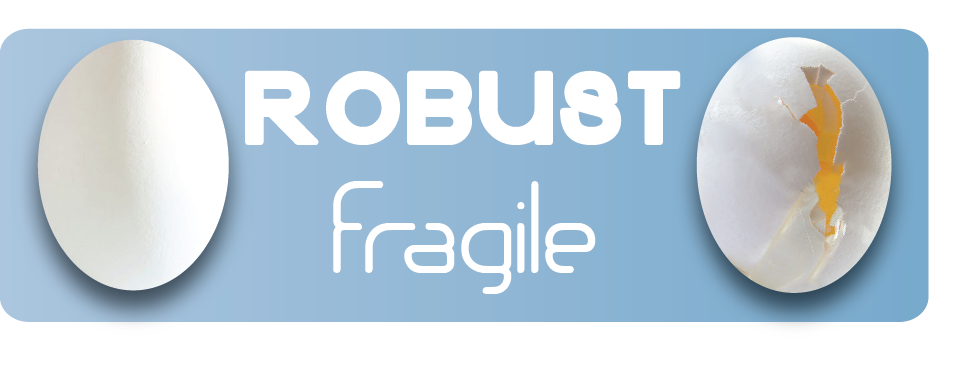
To make the comparision between handmade and industrial we took a regular vase as our object of reference. The terracota vase which is handmade, is heavy and sturdy, while the glass vase that is produced industrialy is delicate and light. We wanted to highlight that although in the end it is the same objet (a vase) they are produced by different methods and materials which makes one robust and the other fragile. 

Monday, November 1, 2010

Laminata, A House of Glass by Kruunenberg Architecten


The Miesian quality of lightness and transparency so sought after by modernist architects has given way to a solidity and materiality seldom associated with the use of glass. The remarkable feature is the use of laminated glass sheets for external and internal walls, which vary from 10 to an incredible 170 centimeters in thickness.


The crux of the underlying concept can be best described in the following processes. First visualize the creation of a massive rectangular block formed by gluing 2000 sheets of plate glass together. Then picture the shearing of this laminated block in its length against the 'grain' to form two massive elements. This initial cut selectively leaves some plates intact so that the central interior spaces are created when the two elements are separated. The intact plates also serve as a reference back to the original block as well as a reminder of the fragility of glass that contrasts with the solid laminated mass. Finally imagine the carving and hollowing out of the two elements to create the other living spaces.


That of course is the concept for the design. In reality, the construction involved precutting 13,000 sheets of glass to size and then painstakingly cleaning and gluing each plate into its place on site. The resulting massive walls of laminated glass rest on one end, on the concrete understructure that forms the basement, and uphold on the other end, the plywood roof. It is a house full of juxtapositions; private and translucent, robust and fragile, brittle and flexible, serene and dynamic, untamed and elegant.
 http://besthousedesign.blogspot.com/2008/10/laminata-house-of-glass-by-kruunenberg.html

 As a monument to glass, this house totally redefines the use of glass as a building material transfoming the perception of the glass as  a fragile material into a robust and strong material, at the same time, despite its most unconventional application of glass,  this is a beautiful functional residence that use the robust part of the galss and the fragility off the appearance.