Monday, October 18, 2010

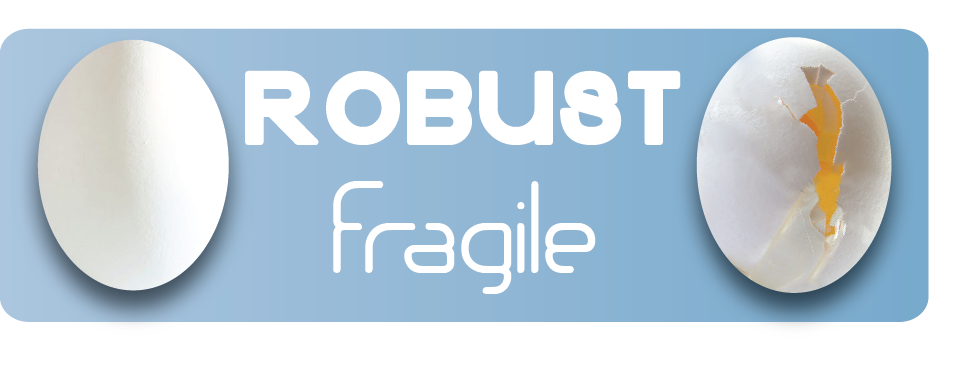
what is robust?

Etymology: It comes from Latin word "robustus-a-um", strong and hardy , originally oaken,  from robor, robus, hard timber and strenght, it's also a special kind of oak "robur oak", named for its reddish heartwood.
Robustious, 1540s, was a common form in XVII century, in Hamlet, act III.2; it fell from use by middle XVIII century, but was somewhat revived by antiquarian writers.
It's define as:
  • having or exhibiting strength or vigorous health
  • having or showing vigor, strength, or firmness <a robust debate> <a robust faith>
  • strongly formed or constructed <a robust plastic>
  •  capable of performing without failure under a wide range of conditions, "robust software"
  • requiring strength or vigor "robust work"
  • of, relating to, resembling, or being a relatively large, heavyset australopithecine (especially  Australopithecus robustus and A. boisei) characterized especially by heavy molars and small incisors  adapted to a vegetarian diet.

Wednesday, October 13, 2010

Robust and Fragile translated in several languages:


Arabo:  قوية الهشة
Basco: Sendoa hauskorra
Bulgaro: Здрав крехки
Catalano: Robust fràgils
Ceco: Robustní křehké
Cinese: 魯棒 /脆弱
Creolo haitiano: Solid frajil
Croato: Robustan krhak
Danese: Robust skrøbelige
Ebraico: חסון שביר
Estone: Robust habras
Ascolta
Trascrizione fonetica
Filippino: Matipuno babasagin
Finlandese: Vankka hauras
Francese: Robuste fragiles
Giapponese : 堅牢な脆弱
Greek (moderno): αυτοδύναμες / εύθραυστη
Inglese: robust fragile
Irlandese: Láidir leochaileach
Islandese: Öflugri brothætt
Malese: Robust rapuh
Norvegese: Robust skjøre
Olandese: Robuuste fragiele
Persiano: مقاوم شکننده
Polacco: Solidna kruche
Portoghese: Robusto frágil
Russo: Надежная хрупких
Slovacco: Robustný krehké
Sloveno: Robustna krhke
Spagnolo: robusto frágil
Swaili: Robust tete
Tedesco: robust zerbrechlich
Turco: Sağlam kırılgan
Ungherese: Robusztus törékeny
Urdu: مضبوط نازک
Vietnamita: Mạnh mẽ dễ vỡ